Yala National Park · Sri Lanka
Yala Block 6 Safari, Sri Lanka
Experience the quieter side of Yala through Lunugamwehera National Park. A vast protected landscape with fewer safari vehicles, excellent birdlife, reliable elephant sightings and an honest guide to what Block 6 is really like.
What is Yala Block 6 really like?
Although many visitors know it as Yala Block 6, it is officially Lunugamwehera National Park.
The park was declared a National Park on 8th December 1995, primarily to protect the Lunugamwehera Reservoir catchment, conserve the surrounding dry zone forests and maintain one of Sri Lanka's most important elephant movement corridors connecting the greater Yala ecosystem with Udawalawe National Park.
Lunugamwehera acts as the elephant corridor between greater Yala and Udawalawe. This is not simply a park description. It is why elephants move through here, and why sightings here can be more consistent than people expect.
Interestingly, Lunugamwehera was not originally part of Yala National Park.
It remained a separate National Park until 2021, when the Sri Lankan Cabinet approved a proposal to designate it as Yala Zone VI because of its similar habitats, wildlife and ecological importance within the greater Yala landscape. Today, safari operators commonly refer to it as Yala Block 6, although its official legal name remains Lunugamwehera National Park.
Immediately beside it lies Yala Block 5.
Although these are legally two separate protected areas, there are no fences between them. Wildlife moves freely across both landscapes, which is why we combine them into a single safari. Rather than experiencing two isolated parks, you experience one continuous wilderness with two very different characters.
The first thing most visitors notice isn't the wildlife.
It's the landscape.
Compared to Block 5, Lunugamwehera feels much more open. Large sections of dry monsoon forest give way to wide reservoir margins, seasonal wetlands, grasslands and open views across the Lunugamwehera Reservoir. The sense of space is one of the reasons many wildlife photographers enjoy this part of the park.
The reservoir itself plays an important role in shaping the wildlife experience.
Completed during the mid-1980s as part of the Kirindi Oya irrigation scheme, the Lunugamwehera Reservoir created a permanent water source in an otherwise seasonal dry zone landscape. During the dry season it attracts elephants, deer, crocodiles, waterbirds and many other animals from the surrounding forests, making it one of the most important wildlife areas within the park.
Another noticeable difference is the number of safari vehicles.
Unlike Yala Block 1, where around 200 to 400 safari jeeps may enter on an average day and well over 600 jeeps can enter during peak holiday periods, Lunugamwehera receives only a small fraction of that number. Official visitor statistics for Block 6 are not published by the Department of Wildlife Conservation, but it remains one of the quietest safari experiences within the greater Yala landscape.
That doesn't mean it's empty.
You'll still see other safari vehicles throughout the day. The difference is simply that sightings are usually shared by far fewer people, allowing a much calmer and more relaxed experience.
Why does Block 6 feel quieter than Block 1?
The biggest difference is the number of safari vehicles.
Block 1 attracts the vast majority of Yala's safari traffic. Based on what we regularly see, around 400 safari vehicles can enter on an average day, while during particularly busy holiday periods the number can rise to more than 600.
Block 6 is very different. On a normal day, you might see around 5 safari vehicles in the area. On a particularly busy day this can rise to around 10. These are approximate figures based on our experience in the field rather than an official daily vehicle count, and they can change depending on the season, holidays and wildlife sightings.
| Yala Block 1 | Yala Block 6 | |
|---|---|---|
| Typical vehicle numbers | Around 400 | Around 5 |
| Particularly busy days | 600+ | Around 10 |
| Leopard sightings | More frequent | Very rare |
| Elephant sightings | Occasional | Relatively regular around the reservoir |
| Main experience | Stronger focus on leopard sightings | Open landscape, reservoir, birdlife |
| Best suited to | Visitors prioritising leopard sightings | Birdwatching, elephants, quiet exploration |
The numbers tell part of the story. But what matters as much is what happens when you are inside the park. In Block 1, news of a leopard sighting spreads quickly between vehicles and a large crowd can form in minutes. In Block 6, the same information reaches far fewer vehicles, and even when a gathering does form, it is a much smaller one.
That changes the feeling of the whole day. You don't have to spend every hour listening for the next radio report. You can stop because something interesting is happening beside the reservoir. You can spend another few minutes watching an elephant herd because they are doing something worth watching. The park lets you move at its pace rather than yours.
What are you giving up by choosing Block 6?
We think this is one of the most important things to explain honestly.
Leopard sightings in Block 6 are very rare. This is not a quieter version of Block 1 with similar leopard chances. If seeing a leopard is your primary goal, we would tell you clearly that Block 1 gives you a much better chance.
Leopards do live throughout Lunugamwehera. But leopard density here is lower, much of the habitat is denser, and the animals are generally less accustomed to safari vehicles. For these reasons, Block 6 should never be promoted as a leopard-focused safari destination. We won't tell you otherwise.
What Block 6 offers in return is something genuinely different.
Elephant encounters here can be more consistent than in Block 1, particularly around the reservoir during the dry season. Because Lunugamwehera acts as the elephant corridor between greater Yala and Udawalawe, elephants move through this landscape with purpose, not just as occasional visitors. Birdlife is one of the park's real strengths. And the open terrain gives wildlife photography a different kind of opportunity from the denser forest sections of Yala.
With almost no other vehicles around, the trade-off becomes clearer. You are exchanging leopard probability for quiet, open space and a wildlife experience that is often more consistent and more personal.
Sometimes the best memory is the animal you never expected to see. Sometimes it is a large elephant herd coming down to the reservoir at dusk. Sometimes it is a painted stork standing in the shallows. Sometimes it is an hour you spent watching crocodiles on a bank with nothing else moving anywhere in sight.
Those moments feel special partly because you haven't spent the entire day chasing something else.
What wildlife can you see in Yala Block 6?
If your main goal is seeing a leopard, then it's important to arrive with realistic expectations.
Leopards do live throughout Lunugamwehera National Park, but sightings are considerably rarer than in Yala Block 1. Leopard density is lower, much of the habitat is denser, and the animals are generally less accustomed to safari vehicles. For these reasons, Lunugamwehera should never be considered a leopard-focused safari destination.
Instead, the park is better known for its broader wildlife experience.
Elephants are seen relatively regularly, particularly around the reservoir and larger tanks during the dry season. Because Lunugamwehera acts as the elephant corridor between greater Yala and Udawalawe National Park, elephant movement through this landscape is more purposeful and consistent than in many other parts of Yala. Although sightings are never guaranteed, elephant encounters here can often be more consistent than in Yala Block 1 simply because permanent water attracts wildlife throughout much of the year. Even so, Udawalawe National Park remains the stronger choice for visitors whose main priority is elephants.
Along with elephants, it's common to encounter spotted deer, sambar deer, wild boar, golden jackals, monkeys, crocodiles and an impressive variety of birdlife.
Birdwatching is one of Lunugamwehera's real strengths.
The combination of permanent water, seasonal wetlands and surrounding dry forest attracts everything from painted storks, ibises, darters and cormorants to crested serpent eagles, brahminy kites, hornbills, barbets, woodpeckers and many migratory species depending on the time of year. For photographers and bird enthusiasts, this diversity often becomes one of the highlights of the safari.
As with every national park, wildlife is always unpredictable.
No ethical safari operator can honestly promise sightings of any particular species. Some days are incredibly active, while others are much quieter. That's simply part of spending time in a truly wild landscape, and one of the reasons every safari is different.
What you might encounter in Block 6
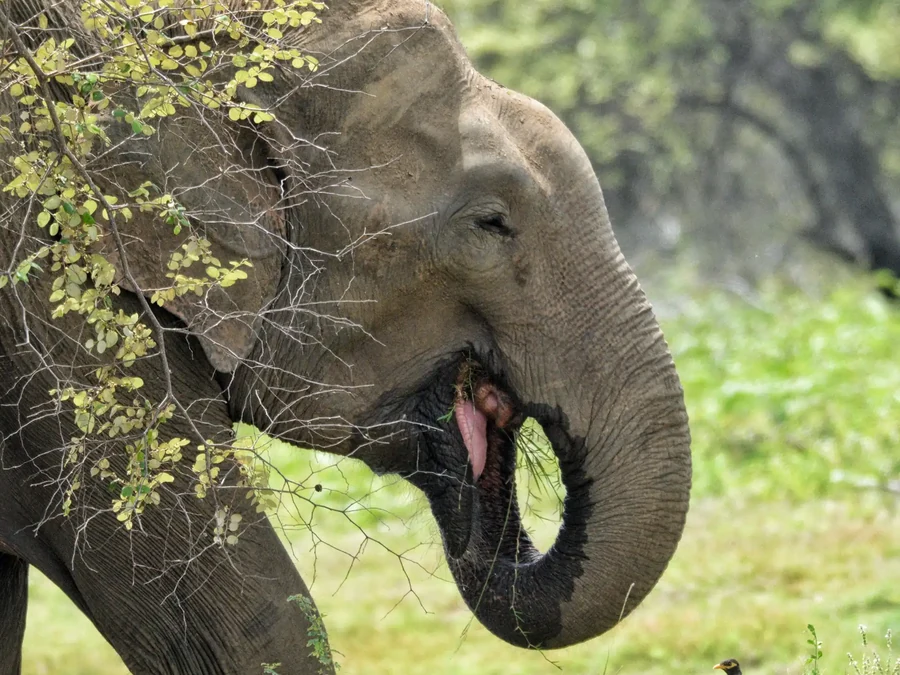
Elephants
Block 6's open terrain and reservoir margins give elephants the best stage in Yala. Herds moving, feeding and interacting without disturbance. The corridor between greater Yala and Udawalawe runs through here.
Relatively regular · Standout wildlife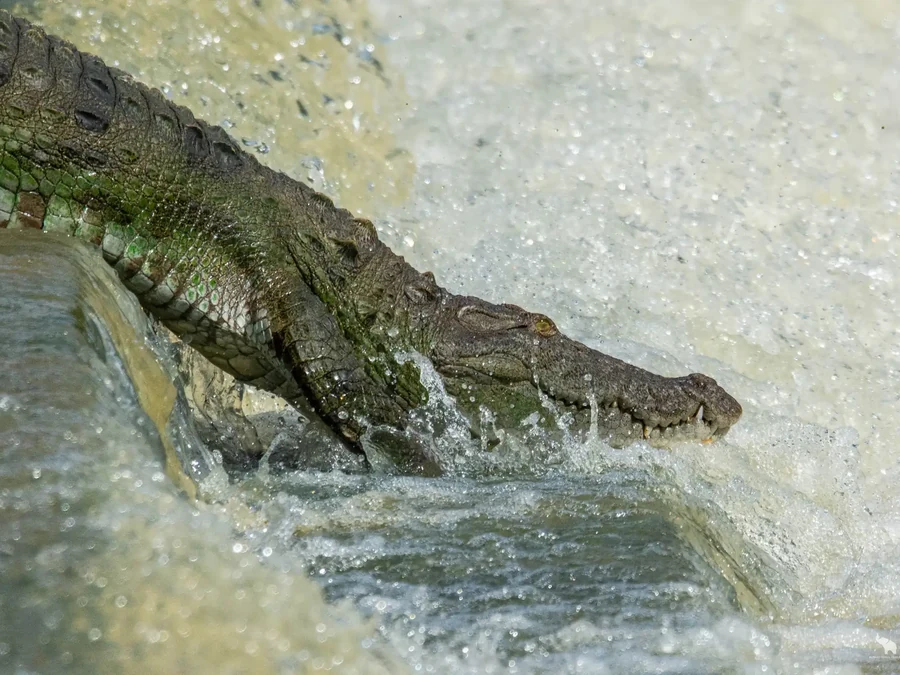
Crocodiles
Mugger crocodiles are common along Block 6's tank edges. Large males are regularly seen basking in the open.
Commonly seen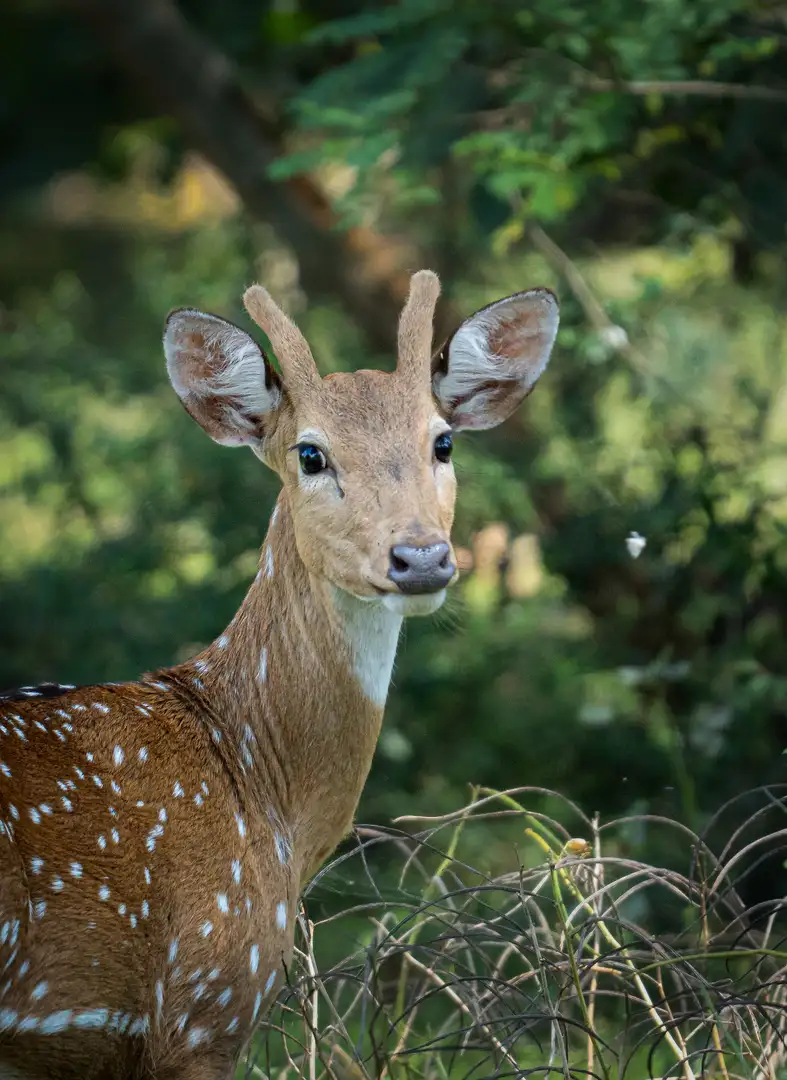
Deer
Spotted deer are abundant throughout Block 6 and form large herds around the tanks. A reliable food source for leopard. Their behaviour is worth watching.
Very common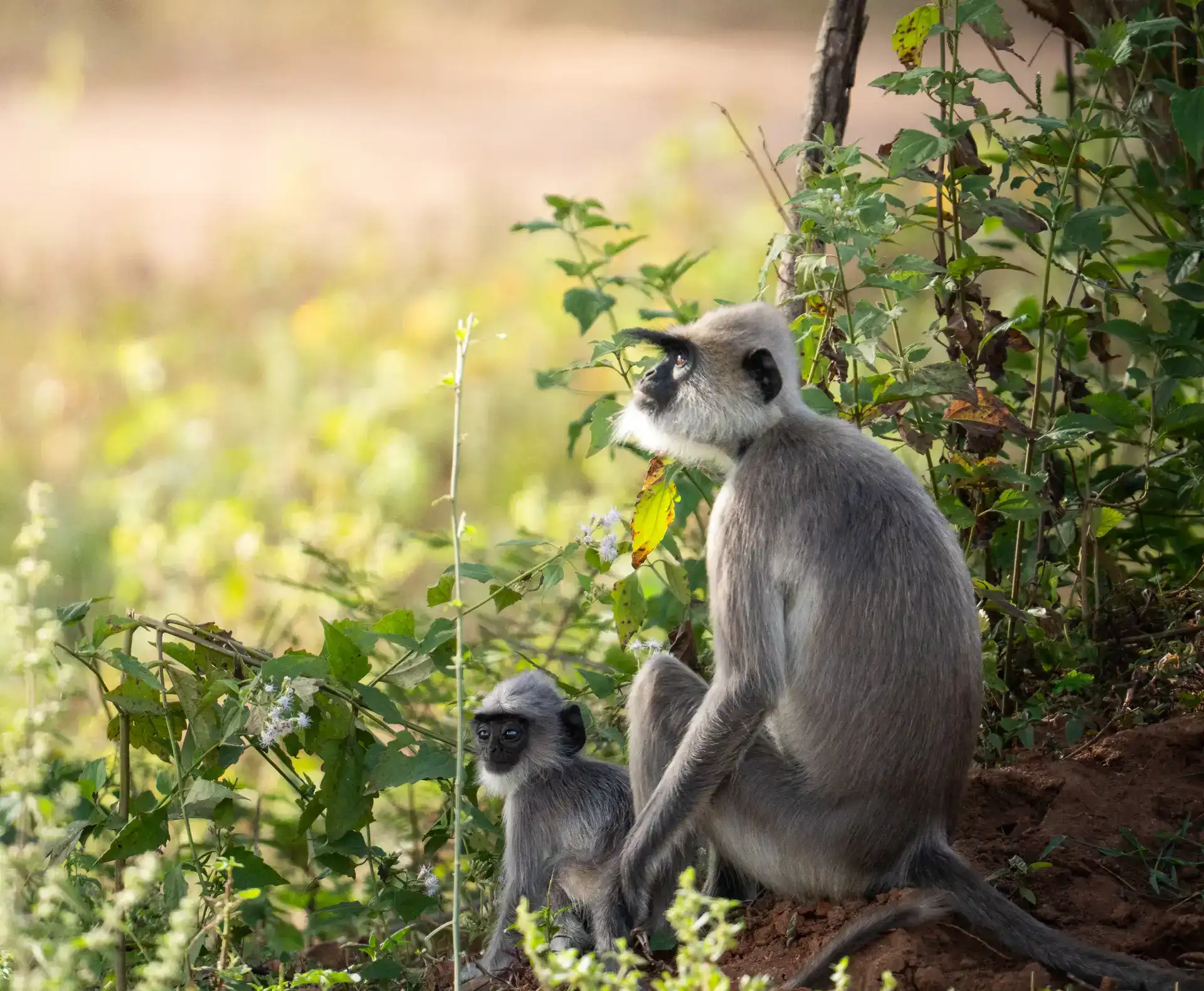
Langurs
Common throughout Block 6, often in large troops. When langurs alarm-call and stare in one direction, there is usually a reason.
Commonly seen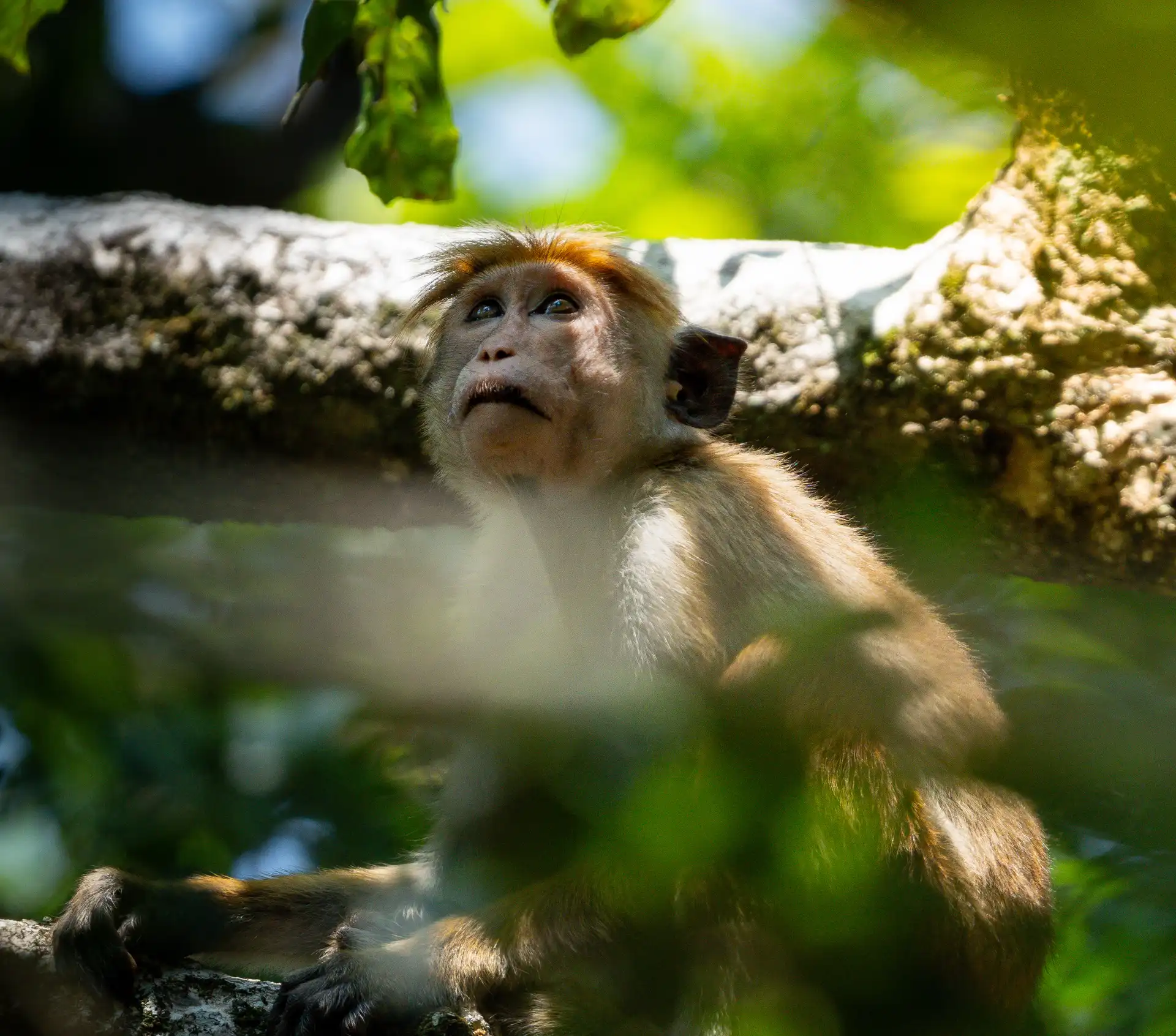
Macaques
Toque macaques are endemic to Sri Lanka. Smaller and more active than the langur. Common near water and forest edges throughout Block 6.
Commonly seen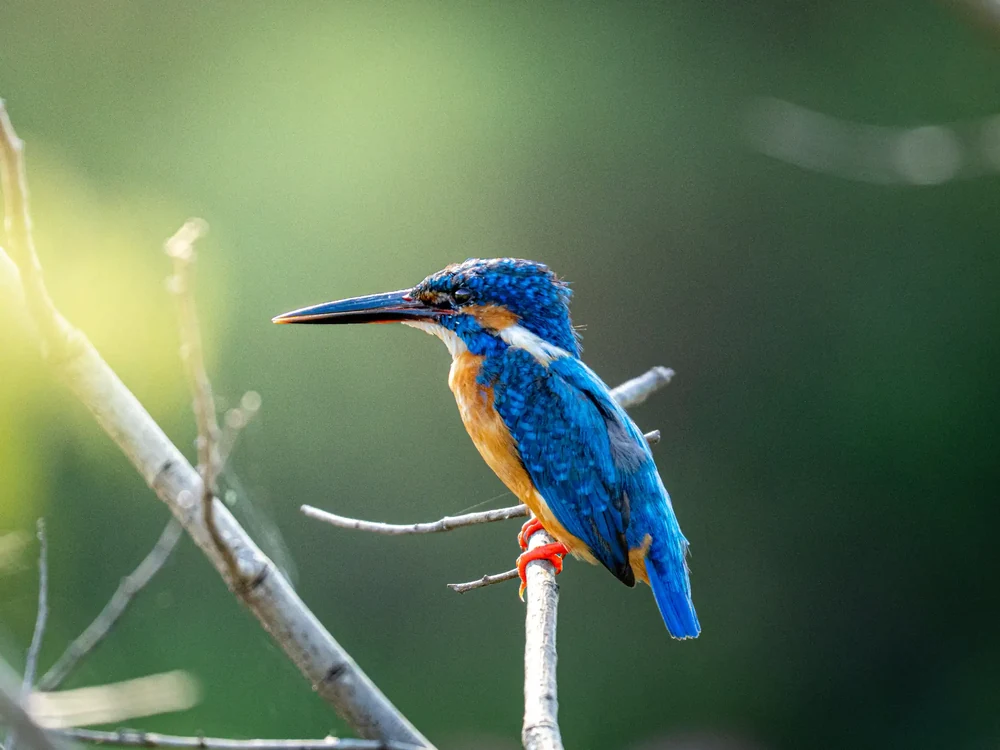
Kingfishers
Several kingfisher species use Block 6's wetland margins. Common, white-throated, and pied kingfishers are all regularly seen.
Commonly seen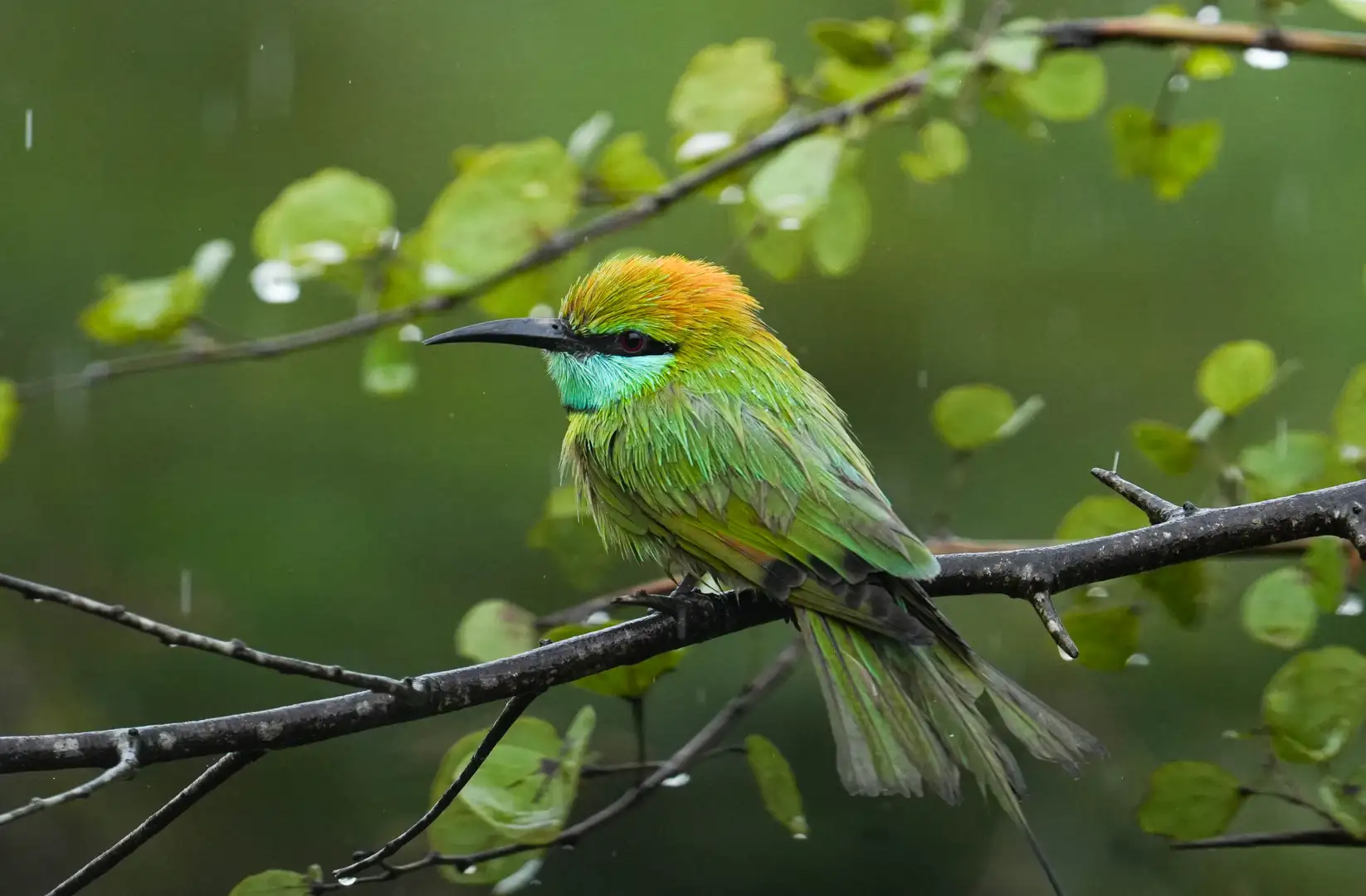
Bee-Eaters
Green bee-eaters are common in Block 6's open areas. The rainy season brings additional species including blue-tailed bee-eaters.
Commonly seen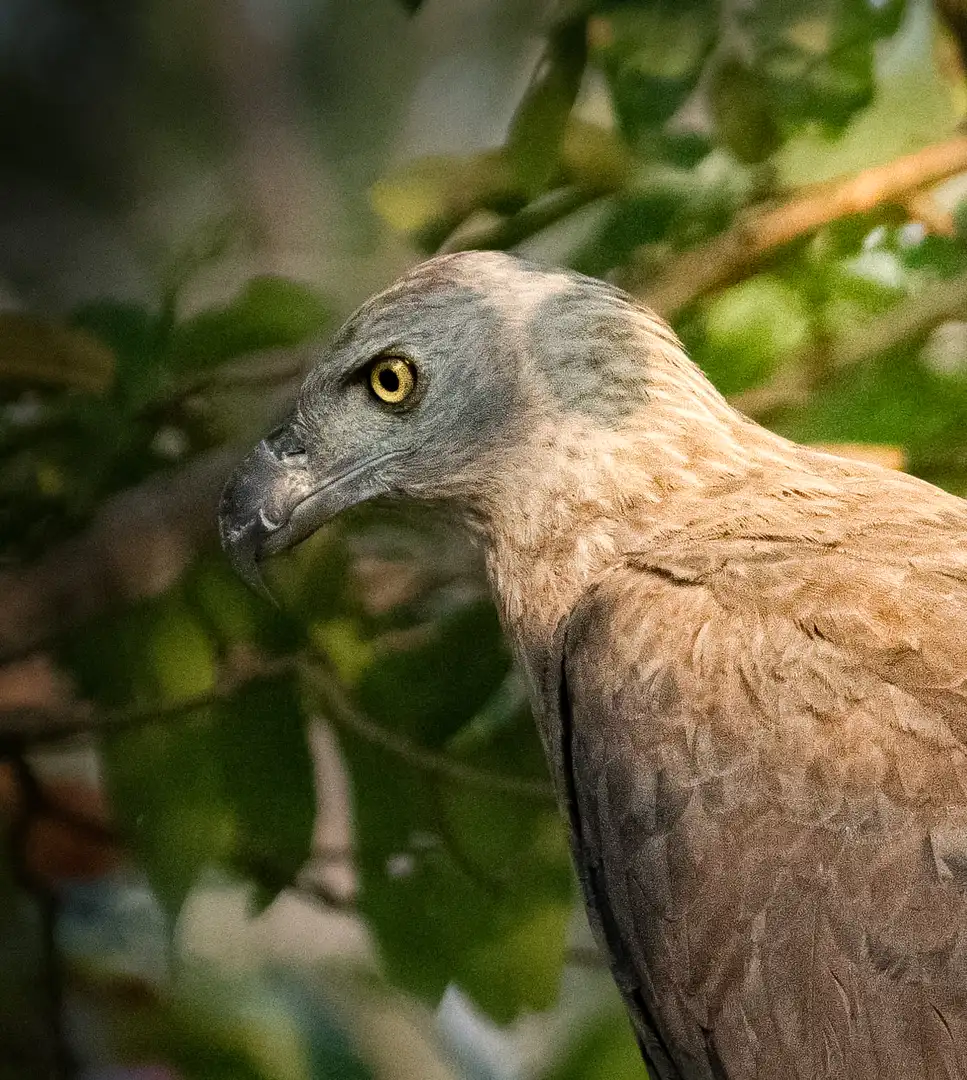
Raptors
Block 6's open landscape is good for raptors. White-bellied sea eagle, brahminy kite, and crested serpent eagle are all regularly seen.
Commonly seen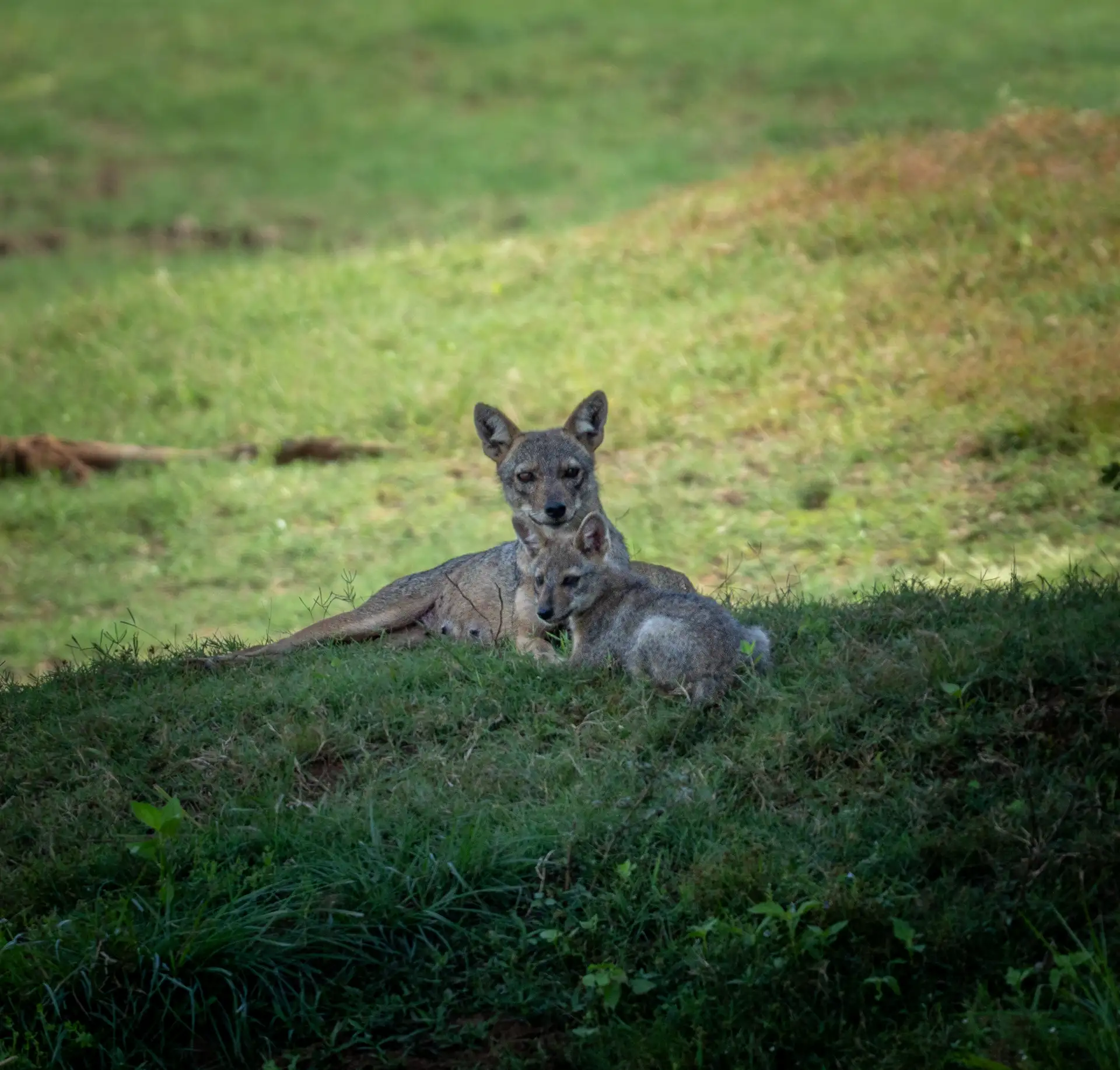
Jackals
Golden jackals are active in the early morning and late afternoon. Regularly seen patrolling open ground and tank margins in Block 6.
Possible, not commonWhat makes a Block 6 safari ethical?
For us, this is not simply about using the word "ethical" because it sounds good. We think the word only means something if it describes what we actually do once we are inside the park.
And we also want to be honest about something that sometimes gets lost when people talk about ethical safaris. We are still here because we love wildlife. Our guests have travelled a long way to experience Yala, and of course we want to give them the best chance we reasonably can to see the animals they have come hoping for.
So if a leopard is genuinely confirmed nearby, we will usually pick up the pace a little and try to reach the area while there is still a realistic chance of seeing it. We don't want to hide that part of our safari behind the word "ethical". If there is a real opportunity, we will make a sensible effort.
But picking up the pace is not the same as racing. We stay on permitted roads, follow the park rules and never drive off the track or take unnecessary risks just to reach an animal faster. There is a difference between trying to reach a confirmed sighting and turning the whole safari into a race.
We are quite comfortable being open about this because we don't believe an ethical safari means pretending that we don't care about seeing wildlife. We do care. A lot. What matters to us is knowing when that effort to find an animal starts becoming pressure on the animal itself.
And this is particularly important with leopards in Block 6. They are difficult to find. Actually, finding a wild leopard is difficult anywhere in the world. It takes patience, many hours in the field and a fair amount of luck. The part you don't always see online is everything that happened before that one beautiful photograph appeared on Instagram. You see the leopard sitting perfectly in the morning light, but you don't see the many hours and sometimes many safaris when nobody saw a leopard at all.
We don't want to give you only the exciting part of the story and make it sound as though a leopard is waiting somewhere in Block 6 if your guide simply knows the right place. It doesn't work that way. Even when we know a leopard has been seen recently, there is no guarantee it will still be there when we arrive.
So yes, if a confirmed leopard report comes through nearby, we will try a little harder to reach it. But we won't let the entire day become a rat race from one radio report to another. If we arrive and the animal is already moving away, we won't block its path just to keep the sighting going or get a better photograph. If an elephant wants to cross the road, we give it space. If an animal becomes uncomfortable because of the vehicles around it, sometimes the right decision is simply to move back and let it continue.
These decisions can seem very small when you look at them individually. Wait instead of pushing forward. Give the animal another few metres. Switch off the engine. Move aside when something wants to pass. Accept that sometimes the better decision for the animal means we may get a less dramatic photograph.
But over the course of a whole safari, there can be dozens of these little decisions. For us, that's where the word "ethical" actually starts to mean something.
The lower vehicle pressure in Block 6 helps with this too. When you aren't surrounded by a large group of jeeps competing for the same sighting, there is generally more room to slow down, observe what is happening and make a calm decision instead of feeling that you have to keep moving because another vehicle is waiting behind you.
And responsible tourism goes beyond what happens inside the jeep. The people living around these protected areas also need ways to earn a living. Guides, drivers, accommodation providers, restaurants and many other local businesses depend partly on visitors. When tourism is managed responsibly, it can give people more reasons to earn from keeping wildlife and natural areas valuable rather than depending as heavily on clearing forests for cultivation or hunting wildlife for trade. Tourism can also help create support for local education and conservation efforts.
It doesn't solve every problem, and we don't want to pretend that it does. But when people can make a living because a forest, a national park and its wildlife are worth protecting, tourism can become one part of keeping those places alive for the future.
Getting here
How do you enter Yala Block 6? The Thanamalwila Entrance
If you are searching for Yala Block 6, one of the first practical questions is where you actually enter.
The main access point for Block 6 is near Thanamalwila, approached from the north. Unlike the routes most visitors associate with Block 1, which involve travelling towards Tissamaharama or through the Yala gate near Palatupana, the Block 6 entrance sits along the road between Ella and the south coast.
From Ella, Thanamalwila is roughly 60 km. This positioning makes Block 6 particularly convenient for travellers who are already moving between these two destinations.
The park generally operates from approximately 6:00 am to 6:00 pm, though exact timings can vary and temporary access restrictions can apply when heavy rain affects the roads.
You can enter through Block 6 and continue into Block 5
This is one of the reasons we particularly like combining Block 6 and Yala Block 5 on the same safari.
Our combined safaris usually start around 1:00 pm from the Block 6 side. We spend time exploring Block 6 first and then gradually continue towards Block 5 later in the afternoon.
There is a practical reason for doing it this way as well. From Thanamalwila towards the Galge side of Block 5, the direct road journey is roughly 50 km. By entering through Block 6 first and continuing through the park towards Block 5, the route is roughly 35 km. That makes it much more practical to experience both areas during the same safari rather than treating them as two completely separate destinations.
Starting around 1:00 pm also brings us naturally into the later afternoon, when temperatures begin to fall and many animals become more active again. This is based partly on our own experience of guiding and observing these animals, rather than something we would present as a guarantee of sightings.
One park ticket covers both Block 5 and Block 6
Although Block 5 and Block 6 are managed as separate sections, you do not need to buy two separate national park entrance tickets simply because your safari moves between the two areas.
If you enter through the Block 6 side and continue into Block 5, the same park admission applies. This is one of the practical reasons we can combine both parks in a single safari without it becoming a complex or expensive arrangement.
Why this can work very well if you're travelling between Ella and the south coast
If you are travelling from Ella towards the south coast, or from the south coast towards Ella, the Block 6 entrance near Thanamalwila is already along the main route between those two areas.
That means you don't necessarily have to make a separate trip to Yala, stay overnight around Tissamaharama and then travel back again simply to do a safari. You can arrange to meet us around the Block 6 entrance, spend the afternoon and evening exploring Blocks 6 and 5, and then continue towards your next destination afterwards. Depending on your itinerary, we can arrange the pickup and drop-off around a suitable point so you can continue towards Ella or the south coast.
For someone travelling on a tight schedule, this can mean less backtracking, less time in a taxi and lower transport costs. It can also mean avoiding an extra night's accommodation simply to make the safari fit into the journey.
Of course, if you have plenty of time and want to stay around Yala for a few nights, there is nothing wrong with that. But if you're already travelling between Ella and the south coast, it is worth knowing that a Yala Block 6 and Block 5 safari can sometimes fit naturally into the journey you are already making.
Do you need to leave the park at midday?
Block 1 has a midday break, while Block 6 and Block 5 can continue operating through those hours. Wildlife activity is usually slower around the hottest part of the day, so we wouldn't tell you that midday is the best time to look for animals.
But those hours are still available.
On a longer safari, this means you don't necessarily have to leave the park simply because the morning session has finished. You can take the middle of the day at a slower pace, perhaps spending time around the reservoir watching birds or resting while the heat is strongest, and then continue exploring as the afternoon becomes cooler.
There can also be an interesting change in vehicle numbers during this period. Morning groups may already have left while afternoon visitors have not yet fully arrived, which can sometimes give you an especially quiet part of the day.
Again, nothing is guaranteed. It is simply another difference between the experience here and the way many visitors experience Block 1.
Where should you stay for a Block 6 safari?
If you are specifically planning to visit Block 6 or combine Block 6 and Block 5, Thanamalwila is one of the most practical places to stay because of its proximity to the Block 6 entrance and the route towards Ella.
Kataragama is another useful option, particularly if you are approaching from the southern side or combining the safari with a visit to the Kataragama temple area.
Tissamaharama, Weerawila and the accommodation areas around the more familiar Block 1 routes are also possible, but they generally involve more driving to reach the Block 6 entrance.
This is another reason we ask guests about their wider Sri Lanka itinerary before simply telling them where to stay. The best place depends on where you are coming from and where you are going next.
When is the best time to visit Yala Block 6?
There isn't one month that we would call the perfect time.
January to March are generally relatively dry, although occasional rain is still possible. These drier conditions can make water sources more important to wildlife and can sometimes make animals easier to locate around the reservoir and dependable water.
April is more of a transition period, with conditions becoming less predictable.
May and June are generally wetter under the influence of the southwest monsoon. These months bring additional birdlife to Block 6's wetland margins and the reservoir can attract larger numbers of waterbirds during this period.
July and August are generally drier again and are often among the most reliable months for elephant sightings around the reservoir.
September to November can bring another wetter period, influenced by the northeast monsoon.
The word "monsoon" can sound quite frightening if you are researching Sri Lanka from another country. It doesn't necessarily mean that it rains continuously from morning until evening for months. Rain can arrive in showers, sometimes very heavily, and then clear again. You can have a wet afternoon and a perfectly usable morning. We don't automatically look at a rainy-season forecast and assume the safari cannot happen. We look at the actual conditions. If heavy rain makes the roads unsuitable, access can be affected. But if the rain passes and conditions are good, a safari can still be perfectly possible.
What about the national park entrance fee?
The national park entrance fee is separate from our safari price. It is paid at the park entrance and is set by the Sri Lanka Department of Wildlife Conservation.
We show the entrance fee separately because it is not money paid to us for the safari. Your total cost therefore has two parts: the safari package you book with us and the national park admission paid separately at the gate.
The current ticket calculation shown below includes the applicable service charge, jeep entry fee and 18% VAT.
How ticket prices are calculated
| Adults | Children | Total guests | Group total (USD) | Per person |
|---|---|---|---|---|
| 1 | 0 | 1 | $42.48 | $42.48 |
| 1 | 1 | 2 | $60.18 | $30.09 |
| 1 | 2 | 3 | $77.88 | $25.96 |
| 1 | 3 | 4 | $95.58 | $23.90 |
| 1 | 4 | 5 | $113.28 | $22.66 |
| 1 | 5 | 6 | $130.98 | $21.83 |
| 2 | 0 | 2 | $71.98 | $35.99 |
| 2 | 1 | 3 | $89.68 | $29.89 |
| 2 | 2 | 4 | $107.38 | $26.85 |
| 2 | 3 | 5 | $125.08 | $25.02 |
| 2 | 4 | 6 | $142.78 | $23.80 |
| 3 | 0 | 3 | $101.48 | $33.83 |
| 3 | 1 | 4 | $119.18 | $29.80 |
| 3 | 2 | 5 | $136.88 | $27.38 |
| 3 | 3 | 6 | $154.58 | $25.76 |
| 4 | 0 | 4 | $130.98 | $32.75 |
| 4 | 1 | 5 | $148.68 | $29.74 |
| 4 | 2 | 6 | $166.38 | $27.73 |
| 5 | 0 | 5 | $160.48 | $32.10 |
| 5 | 1 | 6 | $178.18 | $29.70 |
| 6 | 0 | 6 | $189.98 | $31.66 |
Figures are approximate and based on tourist-season foreign visitor rates for Category I national parks in Sri Lanka. Fees are subject to change by the Department of Wildlife Conservation. We will confirm exact amounts before entry.
Is Block 6 suitable for everyone?
Honestly, no.
If you have travelled to Sri Lanka with one main goal and that goal is to maximise your chances of seeing a leopard, we would tell you to consider Block 1.
If you want a safari where every hour is focused on finding a specific predator, Block 6 may also feel too quiet for you.
But if you enjoy wildlife as a whole, if you like photography, birdwatching, open landscapes and watching animal behaviour, or if you simply don't enjoy being surrounded by large numbers of vehicles, then Block 6 may suit you very well.
You have to accept the trade-off. There will likely be hours when you don't see a leopard. There may also be a moment when an elephant herd appears at the edge of the reservoir with nothing else moving anywhere near you. Those are the moments that tend to stay with people longest.
We cannot decide which day you will get. What we can decide is how we spend the hours in between. And that is really what Block 6 means to us.
Why we chose Yala Block 6
We didn't choose Block 6 because we think it is better than Block 1.
We chose it because of what it actually is.
We like the open reservoir margins where elephants come down and you can spend time with them without a line of vehicles behind you. We like the birdlife, which can fill a morning with things worth stopping for even when the larger animals are somewhere else. We like the space, the quiet, and the sense of being inside a genuinely wild landscape that most visitors never reach.
We also chose it because combining Block 6 with Block 5 makes a better safari than either park offers on its own. They are different habitats with different characters, and crossing between them during the same day gives guests a fuller picture of this part of Sri Lanka.
Sometimes the best moment of a Block 6 safari is an elephant herd appearing beside the reservoir at dusk. Sometimes it is a painted stork you have never seen before. Sometimes it is simply a long and quiet drive through a landscape that feels genuinely undisturbed.
That's the kind of safari we want to offer in Yala Block 6. A safari where we still take every sensible opportunity to find wildlife, but where the experience does not depend entirely on chasing it.
Common questions
Questions about Block 6
Get in touch
Planning a Yala Block 6 or Block 5 safari?
We plan each safari personally and are happy to talk through where you are coming from, where you are going next, what time of year you are visiting and what you are hoping to experience. If you're travelling between Ella and the south coast, tell us. If you're mainly interested in elephants and birdlife, tell us that too.